


PHP Security Warning 2026: Is Your Website Safe?
Your website may look perfectly normal, generate leads, and process customer transactions. But could a vulnerability hidden in its underlying technology put your business at risk?
On October 21, 2026, critical security vulnerabilities in PHP triggered emergency updates and warnings from cybersecurity authorities worldwide.
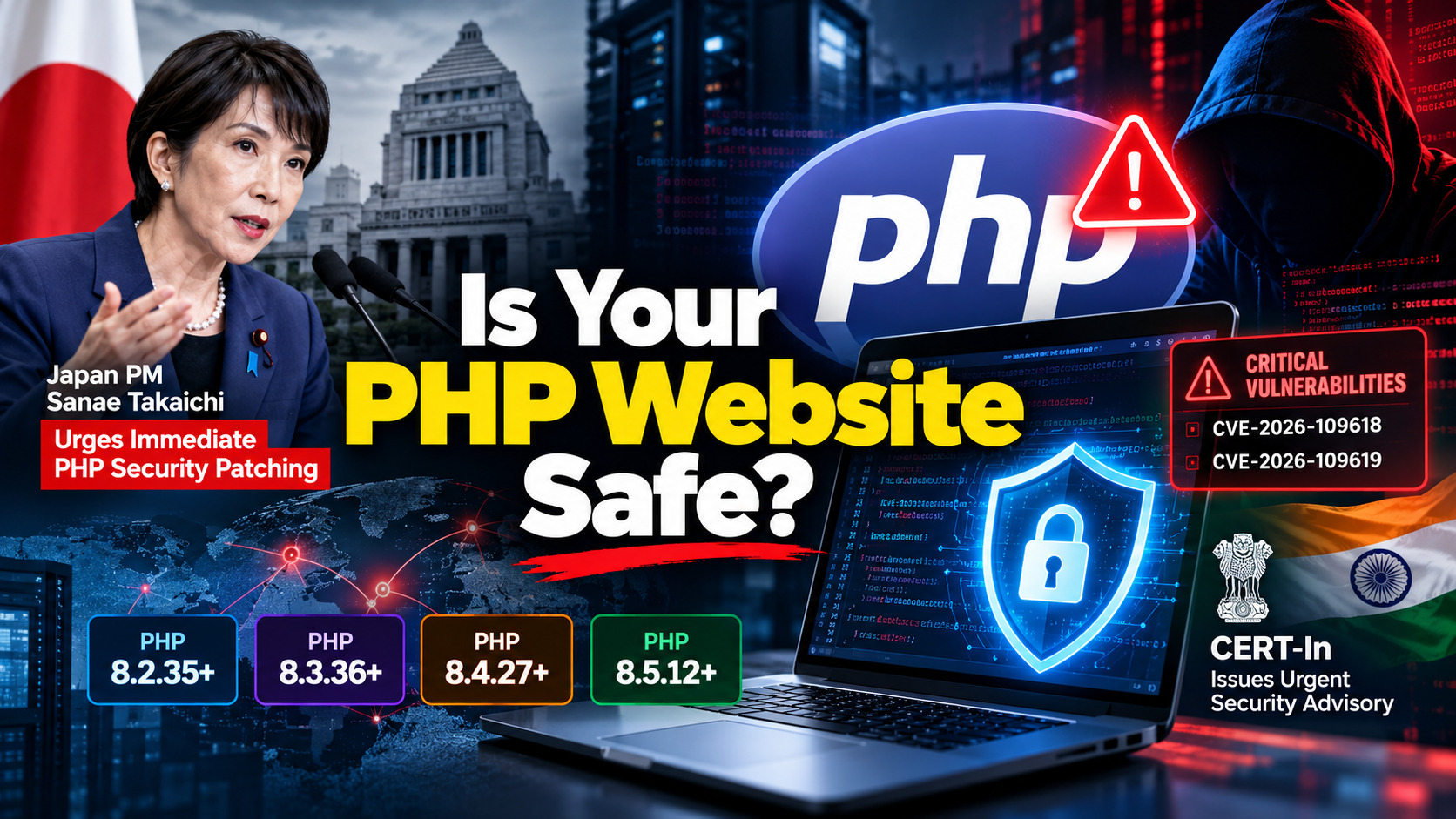
The situation attracted attention when Japanese Prime Minister Sanae Takaichi publicly urged website operators to prepare for immediate security patching.
More concerningly, Amazon's cybersecurity researchers identified attempted exploitation before the vulnerabilities were publicly disclosed.
For businesses operating WordPress websites, Laravel applications, e-commerce stores, and custom PHP platforms, this incident raises an important question: Is your website genuinely secure, or simply functioning without visible problems?
Why Did Japan's Prime Minister Issue a PHP Security Warning?
On October 21, Japanese Prime Minister Sanae Takaichi warned about critical vulnerabilities affecting PHP, a programming language widely used in website development.
According to Jiji Press, published by Nippon.com, she urged website operators to prepare to install security patches as soon as they became available.
She also indicated that temporarily suspending affected website functions could help reduce security risks when immediate patching was not possible.
This was an unusually prominent public warning about a programming-language vulnerability.
It demonstrated that website security is no longer exclusively a technical concern. Vulnerabilities in widely deployed technologies can become a significant operational issue for businesses and organisations.
Amazon Detected Exploitation Attempts Before Public Disclosure
One of the most significant developments came from Amazon Threat Intelligence.
According to the AWS Security Blog, researchers detected an attempted exploitation of the vulnerabilities on October 17, 2026.
That was four days before the public disclosure on October 21.
Amazon subsequently observed additional exploitation attempts targeting its MadPot monitoring infrastructure.
The researchers highlighted an important concern: attackers may attempt to exploit vulnerabilities before organisations receive official warnings or have time to deploy patches.
Amazon also reported that AI-assisted techniques are reducing the time required to develop working exploits after vulnerability details become available.
The implication for businesses is significant: waiting several weeks to install critical security updates may no longer be an acceptable approach.
However, attempted exploitation against monitoring infrastructure does not automatically mean every targeted production website was successfully compromised.
What Did India's CERT-In Say?
The Indian Computer Emergency Response Team (CERT-In) issued a critical vulnerability note on October 21 and a further advisory on October 22, 2026.
The agency warned that the vulnerabilities could allow remote attackers to execute arbitrary code on affected PHP systems.
CERT-In also highlighted reports of widespread exploitation attempts and advised users to patch urgently.
The official advisory identifies two vulnerabilities:
-
CVE-2026-109618
-
CVE-2026-109619
Both involve weaknesses that could potentially result in remote code execution under vulnerable conditions.
For Indian businesses using PHP-based websites, the warning reinforces the need to verify server configurations, installed versions and patch status.
Read the official CERT-In PHP vulnerability advisory.
Are 70% of Websites Really at Risk?
Some reports have connected PHP's widespread usage with claims that approximately 70% of websites are at risk.
That interpretation requires clarification.
The percentage of websites using PHP is not the same as the percentage of websites vulnerable to these security flaws.
Actual exposure depends on factors including the PHP runtime version, security patches, server configuration and application environment.
A properly patched PHP website should not be treated as equally exposed to the reported vulnerabilities as an unpatched installation.
The more important question is whether your website uses an affected PHP version and whether the necessary fixes have been applied.
Which PHP Versions Are Affected?
On October 21, 2026, the PHP development team released emergency security updates addressing the two critical vulnerabilities.
| PHP Branch | Affected Versions | Minimum Patched Version |
|---|---|---|
| PHP 8.2 | Earlier than 8.2.35 | 8.2.35 |
| PHP 8.3 | Earlier than 8.3.36 | 8.3.36 |
| PHP 8.4 | Earlier than 8.4.27 | 8.4.27 |
| PHP 8.5 | Earlier than 8.5.12 | 8.5.12 |
The vulnerabilities received critical severity ratings of 9.2 under CVSS v4.0.
These patched versions address the two identified vulnerabilities, but website owners should also check for newer security releases and other applicable advisories.
Older PHP versions that no longer receive upstream security support require particular attention.
PHP 8.2 is scheduled to reach the end of upstream security support on December 31, 2026.
Check the official PHP release announcements and supported PHP versions for current information.
Could Your WordPress or Laravel Website Be Vulnerable?
WordPress and Laravel are widely used PHP-based technologies.
Although neither platform is automatically compromised simply because it uses PHP, the underlying server environment matters.
WordPress Website Security
WordPress websites depend on PHP to execute server-side functionality.
Even when WordPress core, themes and plugins are updated, the hosting server may still be running an outdated PHP version.
Website owners should verify both their WordPress software and PHP runtime.
Laravel Website Security
Laravel applications also depend on PHP, alongside Composer packages and other server-side components.
Updating PHP requires checking framework compatibility, third-party dependencies, application functionality and production configurations.
An untested upgrade could interrupt business operations, while postponing critical patches could prolong security exposure.
This is why businesses should approach PHP upgrades through planned technical maintenance rather than treating them as routine cosmetic website changes.
How Can You Check Whether Your PHP Website Is Secure?
Business owners can begin with five practical checks.
1. Check your current PHP version. Review your hosting control panel or ask your developer to identify the version running in production.
2. Verify security patch status. Compare your installed version with official PHP security releases and applicable hosting-provider updates.
3. Review WordPress or Laravel compatibility. Ensure that your website, plugins, dependencies and custom functionality support the intended PHP upgrade.
4. Maintain reliable backups. Keep tested, recoverable backups before deploying significant software updates.
5. Monitor unusual activity. Review server logs, unexpected file modifications and suspicious administrative activity. Seek professional incident-response assistance if compromise is suspected.
These measures reduce operational and security risks, although no single action guarantees complete website protection.
Why Website Security Matters Beyond the Latest PHP Warning
For businesses, website security is directly connected to operational continuity and customer confidence.
A successful server compromise could potentially result in website downtime, unauthorised content changes, exposure of sensitive information or disruption to customer transactions.
An e-commerce website may lose orders during an outage. A corporate website may miss valuable enquiries. A customer-facing application may require substantial investigation and recovery work.
The lesson from the October 2026 PHP incident is clear:
Website maintenance should not begin only after a security incident occurs.
Businesses need a proactive approach to software updates, compatibility testing, technical support and infrastructure management.
Why Choose IndoWebTech for Website Development?
A professional website is more than an attractive interface. Its underlying technology, architecture, functionality and long-term maintainability also matter.
At IndoWebTech, we help businesses establish and improve their digital presence through website design, development and digital solutions.
Whether you're planning a new website, upgrading an existing platform or evaluating your current technology, selecting a development partner who understands your business and technical requirements is essential.
A well-planned development project should consider not only what the website needs today, but also how it can be maintained and improved as technology evolves.
Explore IndoWebTech's website development and digital solutions to discuss your project requirements.
Frequently Asked Questions
1. Is every PHP website affected by the October 2026 vulnerabilities?
No. Exposure depends on the installed PHP version and the conditions required for exploitation. Appropriate security patches address the two reported vulnerabilities.
2. Which PHP versions should businesses use after the security warning?
Businesses should use a currently supported PHP release with all applicable security patches. For the October 21 vulnerabilities, the minimum fixed releases were PHP 8.2.35, 8.3.36, 8.4.27 and 8.5.12.
3. Can hackers attack a website even when everything looks normal?
Yes. Some compromises may not produce immediate visible changes. This is why security monitoring, log reviews and software maintenance are important.
4. Does updating WordPress automatically update PHP?
No. WordPress updates and PHP runtime updates are separate processes. PHP is generally managed through the hosting environment or server administration.
5. Why is regular website maintenance important?
Maintenance helps businesses address known vulnerabilities, manage software compatibility, improve reliability and reduce avoidable technical risks.
Final Thoughts: When Was Your Website Last Reviewed?
The October 2026 PHP security incident demonstrated how quickly a vulnerability can become an international concern.
Japan's Prime Minister urged rapid patching. Amazon identified exploitation attempts before public disclosure. India's CERT-In issued an urgent warning to affected users.
Together, these developments reinforce a critical message for website owners: a website that works today still needs ongoing technical attention to remain dependable tomorrow.
If you're planning a website upgrade or want to understand your existing website's technical requirements, connect with IndoWebTech.
Visit IndoWebTech to explore our website development services


Send Enquiry